حالة تطبيق M0310-ACT في اتصالات HART للمشغلات الكهربائية
3. عملية التنفيذ
خطوات تطبيق التوحيد القياسي:
1. المسح الميداني: تأكيد طراز المشغل ومعلمات اتصال Modbus (معدل الباود، طريقة التكافؤ، جدول تعيين عنوان السجل).
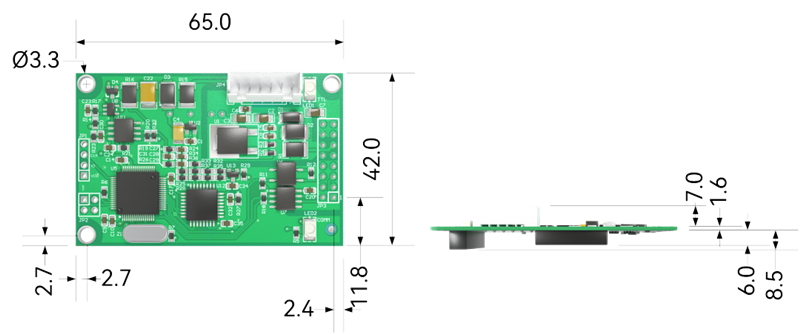
2. تكامل الوحدة: يتم تضمين وحدة M0310-ACT داخل المشغل، وهي متصلة بلوحة التحكم الرئيسية عبر واجهة Modbus، ويتم إخراج واجهة HART إلى الناقل.
3. تكوين المعلمات: استخدم برنامج التكوين المخصص HART MPT لضبط معلمات اتصال Modbus، ونوع المشغل (نوع التشغيل/الإيقاف أو نوع التحكم في الموضع)، وعناوين سجل التحكم، وقيم تعيين الأوامر.
تظهر المعايير المحددة للمعدات ومعايير التكوين في الجدول أدناه:
عناصر التكوين
عنوان التسجيل
أنواع البيانات
افتتاح مستهدف
Float1032
تغذية راجعة للصمام
Float1032
ردود فعل عزم الدوران
Float1032
كما هو موضح في الرسم التخطيطي أعلاه، تم ضبط سجل المشغل على العنوان 3، مع اختيار نوع البيانات Float1032. يتوافق هذا السجل مع قيمة ضبط الفتح المستهدف للمشغل. في الوقت نفسه، تم ضبط متغير الجهاز 0 لتغذية الصمام الراجعة، ومتغير الجهاز 1 لتغذية عزم الدوران الراجعة. يتوافق كل مُعامل بشكل مباشر مع عنوان السجل ونوع البيانات الموضحين في الجدول أعلاه، مما يضمن قيام الوحدة بتحليل وتحويل البيانات ثنائية الاتجاه بدقة.
اختبار الاستقرار: اختبار التشغيل المستمر، ومراقبة حالة مؤشر LED للتأكد من عدم وجود أي خلل في اتصال HART و Modbus.
التسليم والقبول: قم بالاتصال بنظام المحطة الرئيسية HART / DCS / AMS وأكمل عملية تصحيح الأخطاء والقبول المشتركة للوصلة الكاملة.4. تنفيذ الوظائف
بعد التحديث، سيحتوي مشغل Modbus الأصلي على وظائف جهاز HART الكاملة التالية:الحصول على البيانات في الوقت الحقيقي: يتم تحميل متغيرات متعددة مثل موضع الصمام وعزم الدوران ودرجة الحرارة في الوقت الحقيقي عبر متغيرات HART الديناميكية (PV/SV/TV/QV).
قراءة وكتابة المعلمات: يمكن لمحطة HART الرئيسية / نظام AMS قراءة وكتابة إعدادات معلمات المنفذ من خلال أوامر HART القياسية.5. السيناريوهات القابلة للتطبيق
السيناريو 1: في ورشة عمل قديمة، يتم استخدام مشغلات من علامات تجارية متعددة بشكل متبادل، مما يجعل مراقبة البيانات المركزية أمرًا مستحيلاً.
في الصناعات التحويلية، توجد العديد من المشغلات الكهربائية التي تستخدم بروتوكول Modbus RTU للاتصال، لكن أنظمة التحكم العليا تستخدم في الغالب بروتوكول HART، مما يمنع تحميل البيانات إلى نظام التحكم الموزع (DCS). يُمكن لجهاز M0310-ACT تغليف هذه المشغلات كأجهزة HART، مما يتيح الوصول الموحد إليها دون الحاجة إلى استبدال المعدات.
السيناريو الثاني: تطوير التكامل المدمج من قبل مصنعي المحركات
نحن نوفر لمصنعي المشغلات حلولاً موحدة لتكامل اتصالات HART، مما يؤدي إلى تقصير دورة البحث والتطوير، وتمكين ترقيات التوافق السريع لمنتجات HART، وتعزيز القدرة التنافسية للمنتجات.6. ملخص الحل
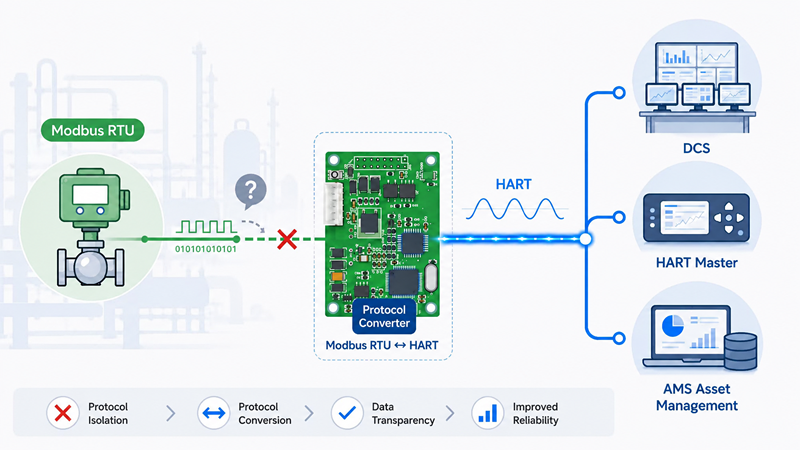
تتميز وحدة التشغيل المدمجة Microcyber M0310-ACT Modbus-to-HART بتصميمها خفيف الوزن، وقابليتها العالية للتكيف، وسهولة نشرها، كمزايا أساسية. وقد صُممت خصيصًا لحل مشكلة حاجز اللغة بين مشغلات Modbus وأنظمة HART في مواقع الصناعات التحويلية.لا يتطلب هذا الحل استبدال المعدات الحالية أو إيقاف الإنتاج لإجراء التعديلات. يمكن دمج مشغلات Modbus الحالية في مشغلات HART القياسية بسهولة من خلال دمج وحدة مدمجة، مما يحقق ترقيات البروتوكول وتوافق البيانات بتكلفة منخفضة للغاية. تتوافق الوحدة تمامًا مع معيار HART 7.9، وتتمتع بنطاق واسع لدرجات الحرارة وحماية عزل من الدرجة الصناعية، وهي مناسبة لمختلف ظروف التشغيل القاسية، مما يجعلها خيارًا فعالًا من حيث التكلفة وموثوقًا للغاية لترقيات المشغلات الذكية.
Core Functionality: Bidirectional protocol translation—HART instructions are translated into Modbus register operations, and Modbus status data is converted into HART standard variables, with no need for additional protocol stack development.
Core Technical Advantages:
Dedicated Dual-Channel Design, Optimized for Actuators: Specifically tailored for electric actuators with two independent dedicated channels — a status monitoring channel (reading 6 device variables including position, torque, temperature, etc.) and a command control channel (target position setting, start/stop, emergency braking). Control and monitoring signals are completely isolated, ensuring safer operation.
Full-Scenario Protocol Compatibility: The HART side strictly complies with the HART 7.9 standard and supports 6 device variables and 4 dynamic variables (PV/SV/TV/QV); the Modbus side supports RTU mode and is compatible with 01H/02H/03H/04H/05H/10H full-function codes, covering the vast majority of actuator communication needs.
Flexible Parameter Configuration: Equipped with a dedicated configuration interface, it supports free switching between two types of actuators: switch type and position control type. The control register address and instruction writing value can be customized.
Industrial-Grade Hardware Performance: Wide voltage power supply (24V±10% DC), Modbus and HART interfaces with 500VAC electrical isolation, wide temperature range of -40℃ to 85℃, and power-on startup time of ≤5 seconds, meeting the requirements of harsh industrial environments.
Matching Points for This Scenario:
The dual-channel design ensures that control commands and status monitoring do not interfere with each other, solving the pain point of confusion between control and monitoring signals from field actuators.
The full-function code is compatible with the communication requirements of various Modbus actuators in the field, without requiring modification of the original equipment program.
Its industrial-grade wide-temperature and isolation design is suitable for harsh electrical environments, ensuring long-term stable operation.
4. Overall Solution Design
4.1 Design Concept
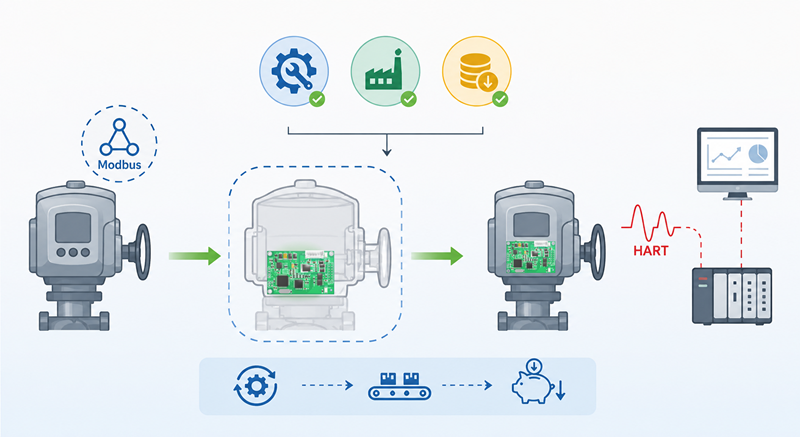
Based on the principles of "no equipment modification, no production interruption, and low cost," the M0310-ACT module is embedded into the existing electric actuator. While maintaining the original Modbus control logic, a standard HART communication interface is added to the actuator, enabling it to be recognized as a native HART device by the HART master station for management and control.
4.2 Solution Advantages
Comparison | M0310-ACT Solution | Traditional Renovation Solution |
Compatibility | Bidirectional translation, the HART master station "feels" directly controlling native HART devices | Requires replacement with native HART actuators or installation of large gateway devices |
Cost | Module-level embedded solutions cost only a fraction of what it would cost to replace a device | Equipment replacement costs are high, and downtime results in huge losses |
Construction Period | Embedded integration, plug and play, short transformation cycle | Requires production shutdown, disassembly, rewiring, resulting in long project duration |
Stability | 500VAC isolation, wide temperature range design, strong anti-interference capability | The new equipment needs to be broken in and tested again. |
2. Expected Results and Value Analysis
5.1 Technical Performance Improvements
Communication Success Rate: The M0310-ACT strictly complies with the HART 7.9 standard, is compatible with various HART master stations and AMS systems, and has 100% communication compatibility.
System Compatibility: Existing Modbus actuators can be recognized as native HART devices by the HART system without any software or hardware modifications.
Data Dimension Expansion: Supports uploading 6 device variables and 4 dynamic variables, breaking through the limitations of traditional 4-20mA single variable transmission.
5.2 Economic and Management Benefits
Cost Savings on Equipment Replacement: Existing Modbus actuators can continue to be used without the need to purchase native HART actuators, which is especially economical for large-scale retrofits.
Avoidance of Production Downtime Losses: The M0310-ACT adopts an embedded integrated solution, and the transformation process does not affect normal production and does not require shutdown, thus fundamentally avoiding the production capacity loss caused by traditional transformations due to production stoppages.
Reduce R&D Investment and Shorten Product Launch Cycle: For actuator manufacturers, the M0310-ACT provides a complete Modbus to HART communication solution. There is no need to set up a dedicated team for HART protocol stack development and hardware design. It can be directly integrated into existing products, which greatly reduces R&D costs and technical risks and accelerates the time to market for HART compatible actuators.
Elimination of Product Stability Testing and Certification Efforts: The M0310-ACT has been thoroughly validated in industrial settings and strictly complies with the HART 7.9 standard. Integrating this module eliminates the need for additional investment in protocol conformance testing, electromagnetic compatibility testing, and long-term stability verification. The module's maturity can be directly reused, effectively avoiding potential problems such as communication instability and poor protocol compatibility that may arise with self-developed solutions.
Unlocking Data Value: Actuator operating status data (valve position, torque, temperature, etc.) are uploaded to the AMS equipment management system in real time via the HART protocol, laying the data foundation for predictive maintenance, equipment health assessment and full life cycle management, and helping enterprises with digital transformation.
3. Implementation Process
Standardization Implementation Steps:
1. On-site Survey: Confirm the actuator model and Modbus communication parameters (baud rate, parity method, register address mapping table).
2. Module Integration: The M0310-ACT module is embedded inside the actuator, connected to the main control board via the Modbus interface, and the HART interface is brought out to the bus.
3. Parameter Configuration: Use the dedicated configuration software HART MPT to set Modbus communication parameters, actuator type (on/off type or position control type), control register addresses, and command mapping values .
The specific parameters of the equipment and configuration parameters are shown in the table below:
Configuration Items | Register Address | Data Types |
Target Opening | 3 | Float1032 |
Valve Feedback | 7 | Float1032 |
Torque Feedback | 9 | Float1032 |

As shown in the diagram above, the actuator register is configured at address 3, with the data type selected as Float1032. This register corresponds to the actuator's target opening setting value. Simultaneously, device variable 0 is configured for valve feedback, and device variable 1 is configured for torque feedback. Each parameter corresponds one-to-one with the register address and data type described in the table above, ensuring the module accurately parses and converts bidirectional data.
Stability Test: Continuous operation test, observe the status of LED indicator to confirm that there are no abnormalities in HART and Modbus communication.
Delivery and Acceptance: Connect to the HART master station/DCS/AMS system and complete the full-link joint debugging and acceptance.
4. Functionality Implementation
After the upgrade, the original Modbus actuator will have the following complete HART device functions:
Real-time Data Acquisition: Multiple variables such as valve position, torque, and temperature are uploaded in real time via HART dynamic variables (PV/SV/TV/QV).
Parameter Reading and Writing: The HART master station/AMS system can read and write the executor parameter settings through standard HART commands.
5. Applicable Scenarios
Scenario 1: In an old workshop, actuators from multiple brands are used interchangeably, making centralized data monitoring impossible.
In process industries, there are numerous electric actuators using Modbus RTU communication, but the upper-level control systems primarily use HART, preventing data from being uploaded to the DCS. The M0310-ACT can "package" these actuators as HART devices, enabling unified access without requiring equipment replacement.
Scenario 2: Embedded Integration Development by Actuator Manufacturers
We provide actuator manufacturers with standardized HART communication integration solutions, shortening the R&D cycle, enabling rapid HART compatibility upgrades of products, and enhancing product competitiveness.
6. Solution Summary
The Microcyber M0310-ACT Modbus-to-HART actuator embedded module features lightweight design, high adaptability, and strong deployability as its core advantages. It is specifically engineered to solve the "language barrier" problem between Modbus actuators and HART systems in process industry sites.
The solution requires no replacement of existing equipment or production shutdowns for modification. Existing Modbus actuators can be "packaged" into standard HART actuators simply through embedded module integration, achieving protocol upgrades and data interoperability at extremely low cost. The module strictly complies with the HART 7.9 standard, possesses industrial-grade wide-temperature range and isolation protection, and is suitable for various harsh operating conditions, making it a cost-effective and highly reliable option for intelligent actuator upgrades.